BPC-157 vs. TB-500: Mechanisms, Research, and Why They're Often Studied Together
- Golden State BIO
- Jun 25
- 3 min read
Updated: Jun 29
BPC-157 and TB-500 are two of the most studied repair-focused research peptides, and they're frequently discussed together. Both show preclinical evidence for tissue healing — but they work through entirely different mechanisms, have different amino acid lengths, and target different aspects of the repair process.
Quick Overview: BPC-157 vs. TB-500
BPC-157 (Body Protection Compound 157) is a 15-amino-acid peptide derived from human gastric juice. TB-500 is a synthetic version of Thymosin Beta-4, a 43-amino-acid peptide found naturally at high concentrations in wound tissue. Despite both being studied for tissue repair, their mechanisms are distinct enough that they are considered complementary rather than redundant.
BPC-157: Mechanism and Research
BPC-157 works primarily through the nitric oxide (NO) system and VEGF pathways, upregulating growth hormone receptors at injury sites and driving angiogenesis. Its preclinical record covers:
Tendon-to-bone healing — multiple rodent studies show accelerated healing of Achilles tendons, rotator cuff injuries, and ligaments.
Gut protection — protection against NSAID-induced damage, IBD-like lesions, and mucosal healing.
Neurological effects — modulation of dopamine and serotonin systems studied for neuroprotection.
Systemic stability — remarkable resistance to enzymatic breakdown.
For a full breakdown, see our dedicated BPC-157 research guide.
TB-500: Mechanism and Research
TB-500 works primarily through actin regulation. Thymosin Beta-4 sequesters actin monomers (G-actin), modulating actin polymerization and enabling cell processes important in repair:
Cell migration — promotes the movement of repair cells to wound sites via actin dynamics.
Angiogenesis — promotes new blood vessel formation, improving tissue vascularization.
Anti-inflammatory — reduces pro-inflammatory cytokines and promotes regulatory T-cell activity.
Cardiac repair — studied for cardiac tissue healing post-injury.
Side-by-Side: Key Differences
Length: BPC-157 = 15 amino acids. TB-500 = 43 amino acids.
Origin: BPC-157 from gastric juice protein fragment. TB-500 from Thymosin Beta-4, naturally found at wound sites.
Primary mechanism: BPC-157 via NO/VEGF/GHR. TB-500 via actin sequestration and cell migration.
Gut effects: BPC-157 has extensive gut protection data. TB-500 has minimal GI-specific data.
Neurological: BPC-157 has significant neurological data. TB-500 does not.
Cardiac: TB-500 has more cardiac tissue data.
Why They're Often Studied Together
The BPC-157 + TB-500 stack has become one of the most common combinations in tissue repair research precisely because the mechanisms don't overlap — they address different stages and pathways of healing. BPC-157 initiates vascular regrowth; TB-500 supports the cell migration and actin dynamics that physically close wounds and regenerate tissue structure.
For reconstitution of either compound, see our BAC water guide and our peptide storage guide.
Frequently Asked Questions: BPC-157 vs. TB-500
What is the difference between BPC-157 and TB-500?
BPC-157 is a 15-amino-acid peptide derived from human gastric juice, primarily studied for tendon and ligament healing, gut protection, and neurological effects via nitric oxide and VEGF pathways. TB-500 (Thymosin Beta-4) is a 43-amino-acid peptide that works primarily by upregulating actin, promoting cell migration, blood vessel formation, and wound healing. They work through different mechanisms and are often studied together.
Can BPC-157 and TB-500 be used together in research?
Yes. Many researchers study BPC-157 and TB-500 in stacked protocols due to their complementary mechanisms — BPC-157 targeting NO/VEGF healing pathways and TB-500 targeting actin upregulation and cell migration. The combination is hypothesized to produce more comprehensive tissue repair effects than either compound alone.
Which is better for tendon research: BPC-157 or TB-500?
Both show strong preclinical data for tendon repair but through different mechanisms. BPC-157 has more direct tendon-to-bone healing data. TB-500's actin-regulation mechanism makes it particularly relevant for cell migration and vascularization. They are considered complementary rather than competitive.
What is TB-500?
TB-500 is a synthetic version of Thymosin Beta-4, a naturally occurring 43-amino-acid peptide found in high concentrations at wound sites. By upregulating actin availability, TB-500 is studied for its effects on cell migration, angiogenesis, and tissue repair.
Is BPC-157 or TB-500 FDA approved?
Neither BPC-157 nor TB-500 is FDA approved. Both are research compounds sold strictly for preclinical laboratory research and are not approved for human use.
What does BPC-157 stand for?
BPC-157 stands for Body Protection Compound 157. The name refers to its origin as the 157th fragment identified in a research program screening gastric juice proteins for bioactive sequences.
How are BPC-157 and TB-500 stored?
Both peptides are supplied lyophilized and should be stored at -20°C until reconstitution. Once reconstituted in bacteriostatic water, store at 2–8°C and use within 2–4 weeks. Aliquot before freezing to avoid repeat freeze-thaw cycles.
Shop BPC-157 and TB-500 at Golden State BIO
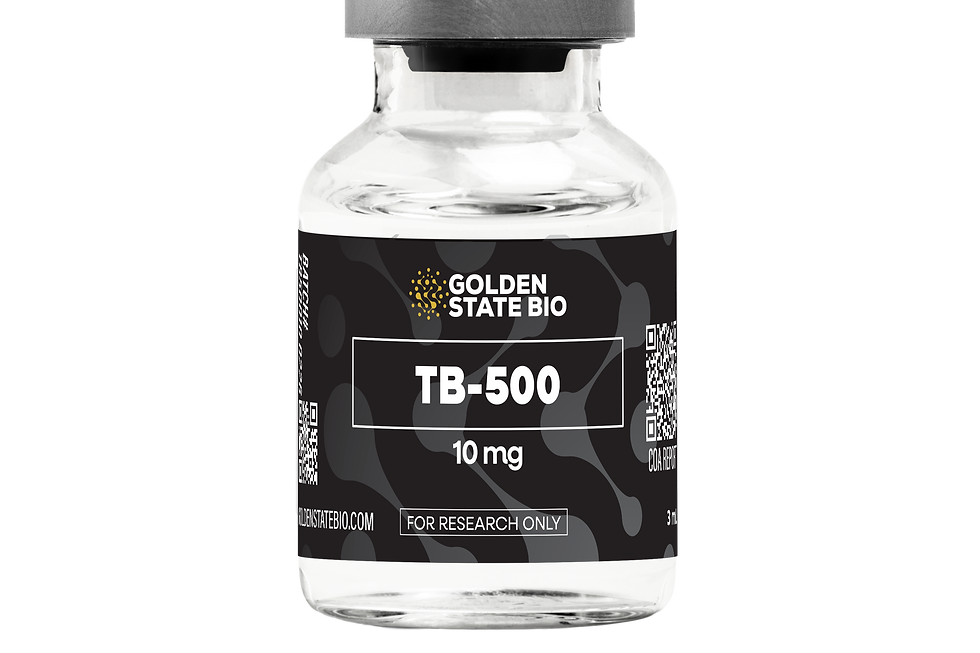
Golden State BIO carries both BPC-157 and TB-500 at ≥98% purity, third-party HPLC verified, with CoAs available for every batch.
The Bottom Line
BPC-157 and TB-500 address tissue repair from different angles — NO/VEGF/growth hormone signaling vs. actin dynamics and cell migration. Their complementary mechanisms are why researchers frequently study them together. Both remain preclinical research compounds with strong animal model data but no completed human clinical trials.

Comments